Smarter Vacations with AI Travel Planning
Planning your dream vacation just got ridiculously simple. AI travel tools can now craft personalized itineraries that feel like they’re reading your mind. What used to take hours of research now happens in minutes.
A couple of years ago, I tested this myself. We’ve got an RV, we love to bike and hike, and we wanted to stay within five hours of home. One more rule: it had to be near water, a lake, or a swimming hole.
ChatGPT delivered something amazing. Instead of a generic list of tourist traps, it gave us actual RV campgrounds near lakes and mountains with bike trails nearby—all within our driving limit. We ended up at Lake George, and the trip checked every single box.
It wasn’t just useful, it felt like the thing was reading our minds.
Why AI Travel Planning Actually Works
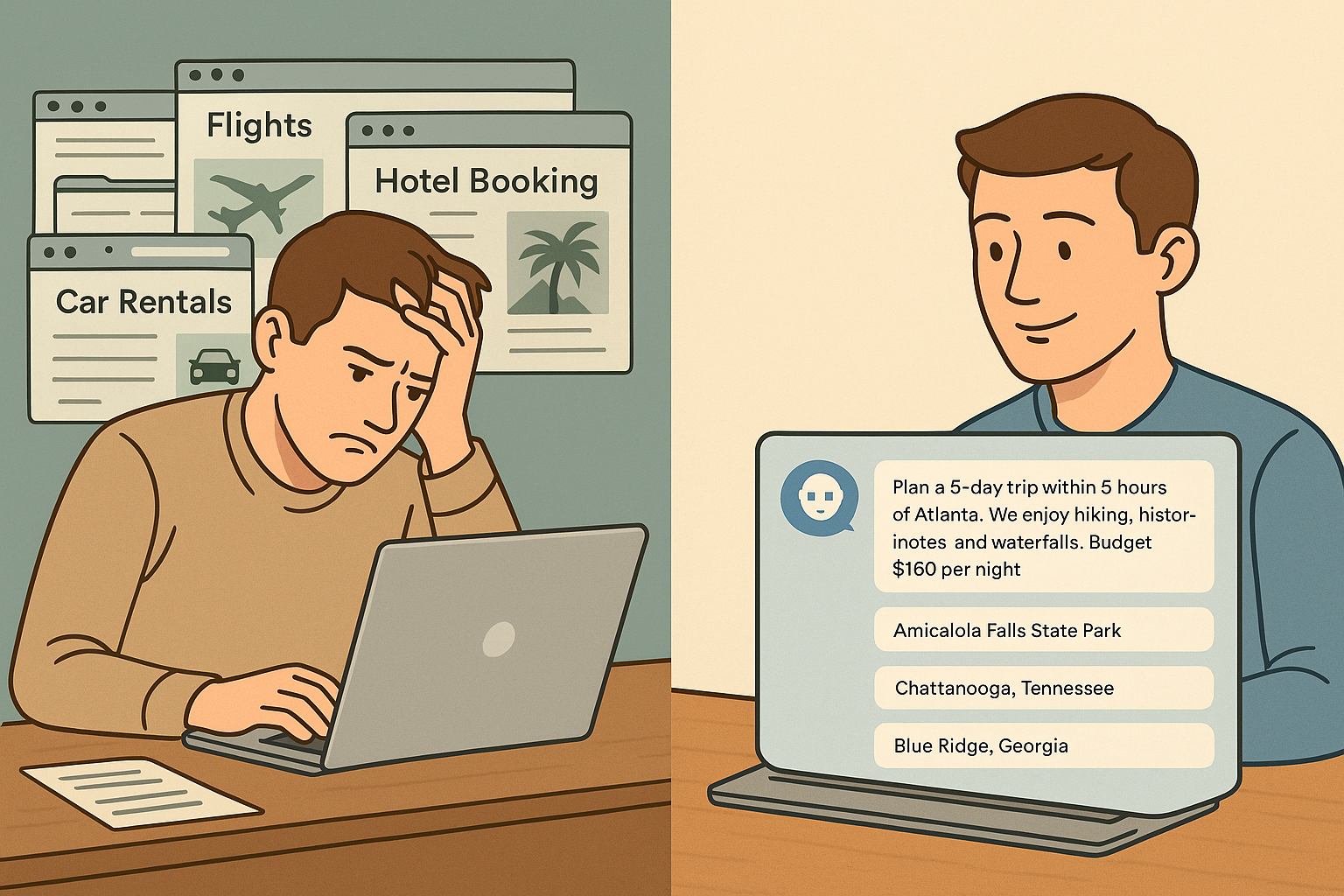
Traditional trip planning is exhausting. According to Priceline research, the average traveler spends two full workdays — 16 hours — planning and booking a single trip.
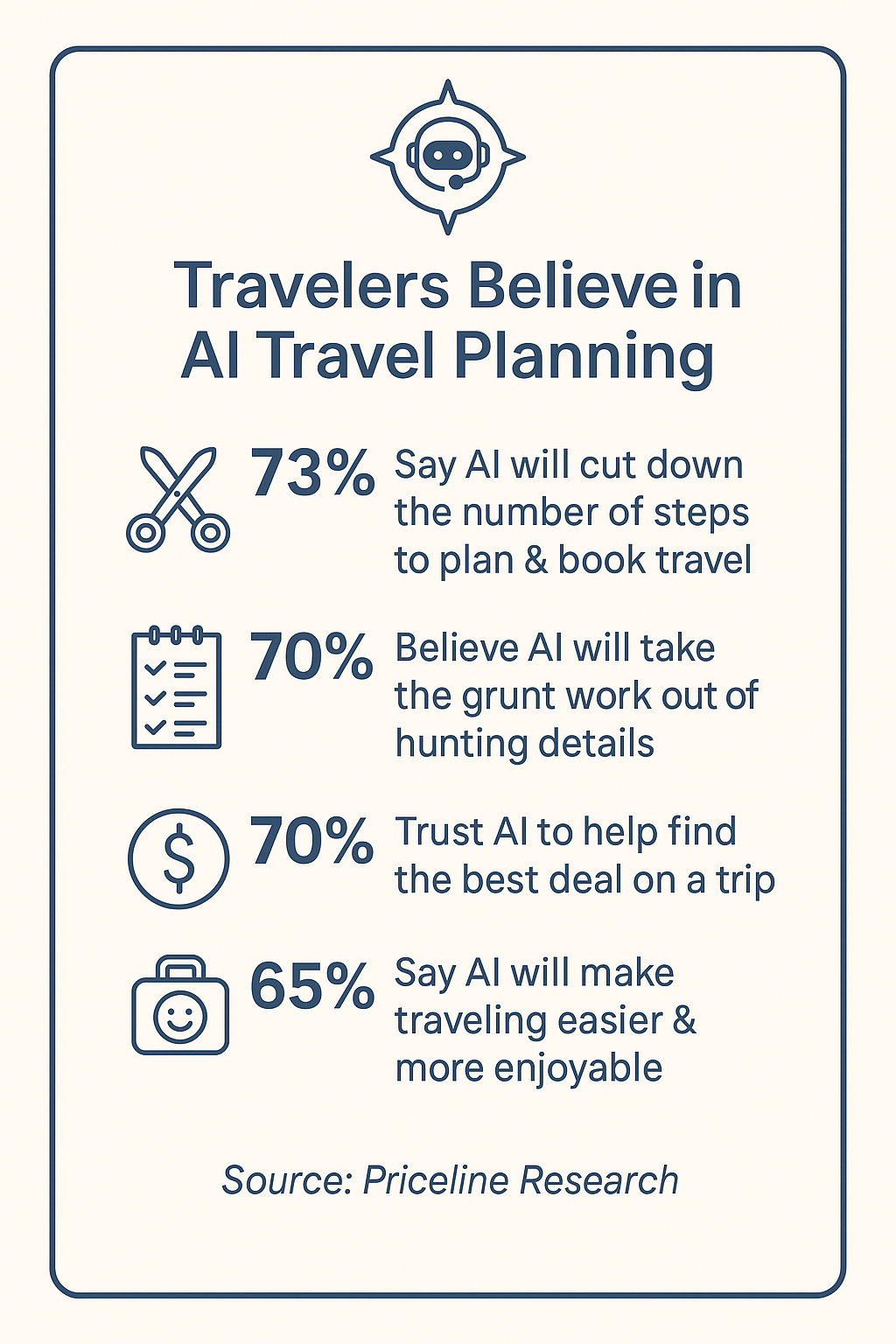
Those numbers line up with my own experience. Instead of slogging through a dozen sites, AI gave me a focused, personalized set of options in minutes.
Here’s what “old school” planning usually looks like:
- Google searches (“best campgrounds near mountains”)
- Review sites (endless Tripadvisor rabbit holes)
- Travel blogs (some great, some… questionable)
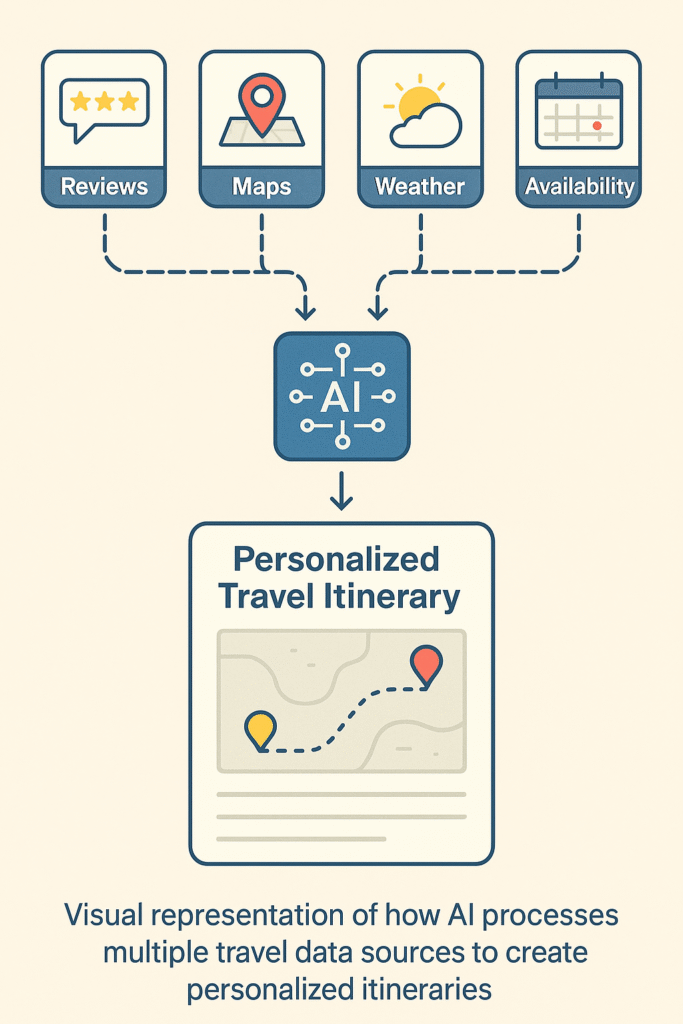
- Maps, weather checks, and availability lookups
AI travel systems, on the other hand, tie everything together. They don’t magically “know” your dream trip, but when you give them your preferences, they filter through the noise and serve up ideas that feel tailor-made.
Essential Inputs for AI Travel Success
Think of AI like a sharp travel agent who only knows what you tell them. More detail = better results.
The four must-haves:
- Dates – Be specific. “August 10–14” works better than “sometime in August.”
- Budget – Include lodging, food, and activities. “Under $200 a night for a cabin” or “cheap but clean RV campground.”
- Preferences – Hiking? Biking? Museums? Food tours? The more personal, the better.
- Dealbreakers – Crowds, dietary needs, pet-friendly stays, or kid-friendly activities. Spell them out early.
Copy-Paste AI Travel Prompts That Work
Here are some ready-to-use prompts you can drop into ChatGPT or any AI travel planner:
- “Plan a 5-day RV trip within 4 hours of Boston. We like hiking and kayaking, and want a campground near water with biking trails. Budget $150 a night. No crowded tourist spots.”
- “Create a weekend trip itinerary for two adults who love wine tasting and small-town charm, within 3 hours of San Francisco. Include 3 lodging options and local restaurants.”
- “Suggest a family-friendly beach vacation in Florida in June with vegetarian-friendly restaurants, under $2,000 total budget.”
Surprisingly often, AI comes back with thoughtful, specific suggestions that check every single box.
The Honest Pros and Cons
The Pros:
- Saves hours of research (up to 16 hours, based on Priceline’s study)
- Filters recommendations around your quirks
- Finds creative ideas you wouldn’t have Googled
- Gives you a great starting point for booking
- Backed by traveler optimism (65–73% say AI will make planning easier and more enjoyable)
The Cons:
- AI doesn’t know live availability (you’ll still need to book)
- Occasionally suggests places that sound real but aren’t
- Won’t replace the joy of serendipity when you stumble onto something unexpected
Your Step-by-Step AI Travel Strategy
- Start broad – Ask for several options.
- Refine iteratively – Tell it what you liked or disliked.
- Request full itineraries – Get day-by-day breakdowns.
- Double-check – Always confirm with Google Maps, reviews, and official booking sites.
Think of AI as your brainstorming partner. It gets you 80% of the way there; you polish the last 20%.
The Future: Agentic AI That Books Trips for You
Right now, AI is an amazing travel planner, but not yet a trusted booking agent. The big vision for “agentic AI” is that it won’t just suggest where to stay and what to do — it will actually book flights, hotels, and rental cars for you automatically.
I tested this on a recent trip, asking AI to find my cheapest and best flight options. Instead of just listing results, it spun up a virtual browser desktop and started “thinking” out loud, clicking through travel sites.
Here’s what happened:
- It really did find some flight options I hadn’t considered.
- It also got blocked by certain travel sites that detected it was an AI.
So while the potential is huge, we’re still in the early days. And honestly? I wouldn’t trust it to put my credit card on file — at least not yet. AI can save you hours of planning now, but I’d keep the actual booking in your own hands until agentic AI becomes more reliable (and more widely accepted by travel sites).
The Bottom Line
If you’ve ever lost an entire weekend scrolling through “best places to stay near [destination],” you know how draining travel planning can be.
With AI, the process flips. Instead of drowning in endless options, you start with a personalized blueprint and refine from there.
Our Lake George trip convinced me: AI travel planning isn’t just “good enough.” It’s often better than what I’d come up with on my own.
So next time you’re itching for a getaway, don’t just Google. Tell AI what you want. Let it surprise you!